
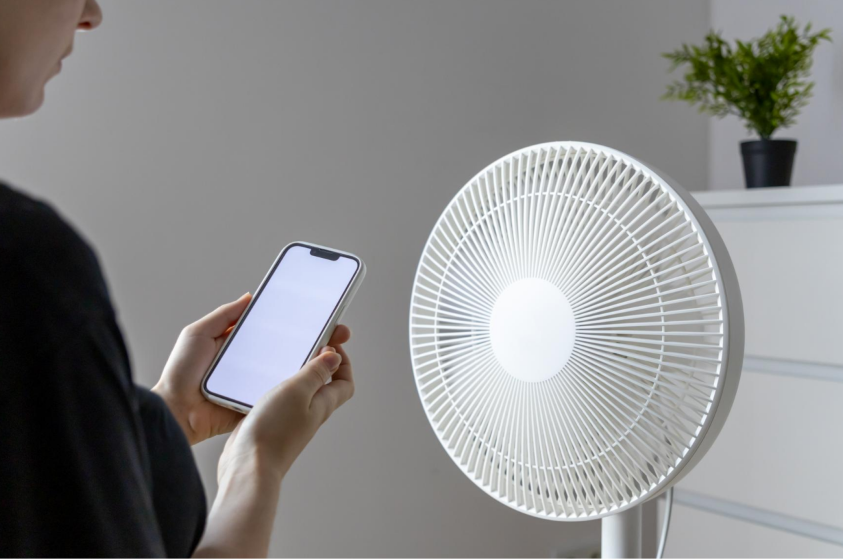
A whole house fan improves ventilation in Wildomar, CA by swapping the hot, stale air inside a home for cooler outdoor air within minutes. It works best in the evening, once the temperature outside drops well below the temperature inside. Reese Mechanical Inc. provides HVAC services from its base in Murrieta, and ventilation is part of every system we design. Here is how the fan fits in.
What a Whole House Fan Actually Does
The fan is mounted in a central hallway ceiling or in the attic floor. When it runs with a few windows open, it pulls outdoor air through the living space and pushes indoor air up into the attic. From there the air leaves through the roof and gable vents. Nothing gets refrigerated. The warm air simply leaves.
That exchange also clears stale air, cooking odors, humidity and airborne particles that build up over a closed-up afternoon. Windows alone cannot match it. For a house that has been sealed since noon, twenty minutes of fan time in the evening resets the air inside. The air conditioner never has to do that work.
How It Differs From Central Air Conditioning
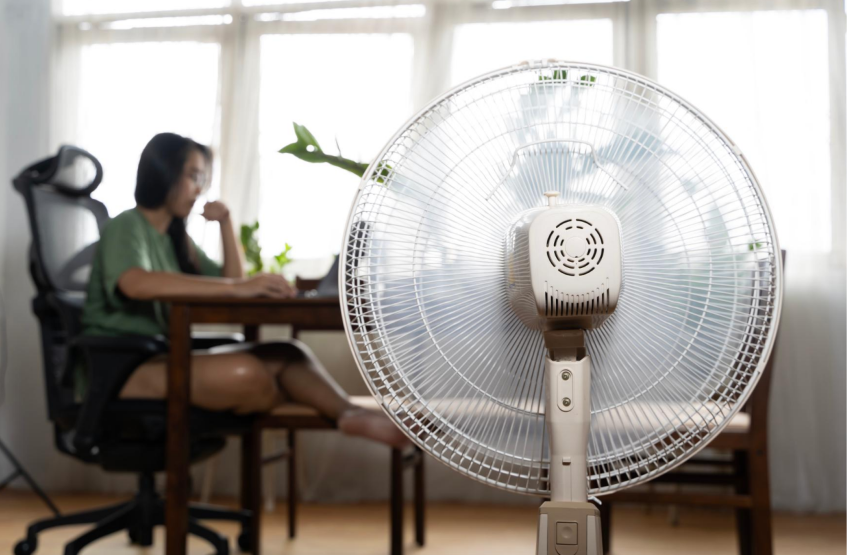
Central air cools and dehumidifies through a refrigeration cycle. Outdoor conditions do not matter. A whole house fan depends entirely on outdoor air being cooler than indoor air. It is a tool for certain hours, not all day. A Wildomar afternoon in peak summer is too hot for outdoor air alone to cool anything.
| Whole house fan | Central air conditioning | |
|---|---|---|
| Cools by | Replacing indoor air with outdoor air | Running air through a refrigeration cycle |
| Works when | Outdoor air is cooler than indoor air | Any outdoor temperature |
| Best hours | Early morning and evening | Afternoons and heat waves |
| Humidity | Follows outdoor humidity | Removes moisture from indoor air |
| Power draw | A fraction of an air conditioner | Full compressor load |
The two work best as a pair. The fan handles evening cooling and fresh air, so the air conditioner faces less demand during the hours a fan can do the job. Expert ventilation design and maintenance work treats the two as one system, sized and controlled together.
The Energy Case for a Whole House Fan
Moving air costs far less than cooling it. A whole house fan draws a fraction of the electricity a central air conditioner uses over the same stretch, because no compressor is running. Shifting evening cooling to the fan reduces how often the air conditioner starts. Over a full season, that adds up.
The savings are largest in spring and fall, when evening temperatures cooperate more often than they do in August. Homes that use the fan consistently during those windows typically see a modest but steady reduction in air conditioner runtime. The exact figure depends on the house, the attic, and the habits of the family. We do not promise a number.
Curious whether your attic and windows suit a whole house fan? Call Reese Mechanical at (951) 970-2344. We look at the house before recommending anything.
Where the Fan Fits Into Whole Home Ventilation
Good ventilation is about more than temperature. It controls humidity, moves pollutants out, and keeps indoor air from going stale. A whole house fan contributes by exchanging indoor air for outdoor air on a schedule the homeowner controls. Passive leakage and the recirculation built into a central system cannot do that.
This matters most in homes that stay closed for long stretches during hot afternoons. Indoor air grows stale, and humidity builds with nowhere to go. The fan gives that air an exit. It also pulls a full change of fresh air through the bedrooms right before sleep, which is when most families notice the difference.
What to Check Before Installing One
Not every home is a good candidate. Five things decide whether a fan will earn its keep:
- The attic ventilation area must be large enough to let the airflow out, or pressure builds and the fan underperforms
- Attic insulation should be in good condition, since the fan opening needs a sealed, insulated cover for winter
- Window area that can be safely opened at night, because the fan needs an inlet path to work
- Noise tolerance, since some models run louder than others and a poorly sized unit is the usual cause
- Gas appliances in the home, which need proper venting so the fan cannot backdraft a water heater or furnace
Sizing and installation decide whether the fan gets used. A properly sized unit runs quietly. That is why it gets switched on in the evening instead of forgotten. Reese Mechanical was founded in 2018 on 25 years of industry experience. We evaluate the attic, the existing HVAC, and the household routine before recommending a fan or any other ventilation change.
The HVAC maintenance warning signs we see most often start with airflow problems. Ventilation work fixes many of them.
Frequently Asked Questions
Can a whole house fan replace air conditioning in Wildomar?
No. Summer afternoons here regularly exceed the point where outdoor air can cool a home, and a fan only moves air. It replaces the air conditioner during mild mornings and evenings, and in spring and fall it can carry most of the cooling load. Through peak heat, the air conditioner still does the work.
When should I run a whole house fan?
Whenever outdoor air is noticeably cooler than indoor air, which usually means early morning and after sunset. Open a few windows before switching it on, run the fan until the house feels cool, then close up and shut it off. Running it with the windows shut or in afternoon heat does nothing useful.
How loud is a whole house fan?
It depends on the model and the installation. Older single speed units can be loud. Newer insulated, multi-speed fans mounted on rubber isolators run quietly enough for a normal evening. Correct sizing matters most, because an oversized fan on a small attic runs louder than it should.
Does a whole house fan help with indoor air quality?
Yes, on evenings when the outdoor air is clean. It flushes cooking odors, humidity and indoor pollutants out through the attic in minutes. On days with smoke or heavy pollen outside, keep it off and let the filter in the central system do the work instead.
Fresher Air for Wildomar Evenings
A whole house fan will not carry a heat wave. For the many mild evenings in a Wildomar, CA year, it is a low-cost way to cool the house and refresh its air. Reese Mechanical Inc. can tell you whether your home is a good candidate. We serve homes and businesses across Wildomar, Murrieta, Temecula, and Menifee, along with the wider Riverside, San Diego, Orange County, and Los Angeles region.
Reese Mechanical Inc.
Address: 26217 Jefferson Ave., Murrieta, CA
Phone: (951) 970-2344
Email: admin@reesemechanical.com
Hours: Monday to Friday, 7:00 am to 5:00 pm. Closed Saturday and Sunday.
Call (951) 970-2344 or send a message through our website to arrange a ventilation assessment in Wildomar. Cooler evenings start there.
Related Topics: