
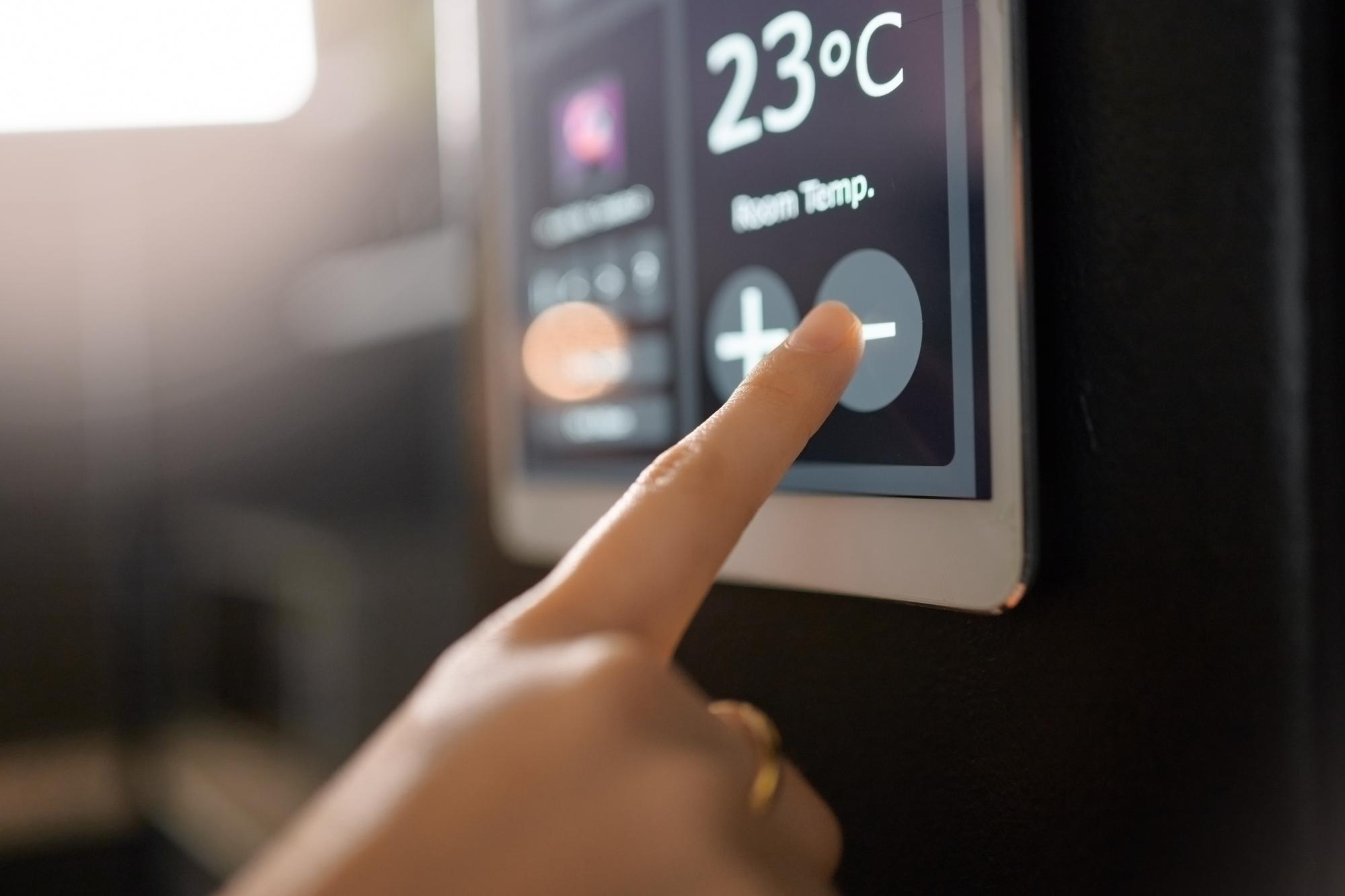
A thermostat that wipes its schedule is almost always losing power, not failing. Weak batteries cause most of it, and a missing or loose common wire causes most of the rest. A damaged thermostat wire is behind the stubborn cases that survive both fixes, and yeah, those are the ones that take a bit longer to track down.
We handle these calls often, since we run a dependable HVAC service in Murrieta, CA, covering heating, air conditioning, ventilation, and heat pump work. There are over two decades of field experience behind the crew at this point.
Our technicians trace the power path first, before anyone even mentions a new thermostat. Just keep an eye on whether the resets happen while the system is running or at random, because that detail splits the likely causes pretty much in half.
What Losing the Schedule Actually Means
There’s actually a difference between a thermostat that forgets its schedule and one that’s just overriding it. Hold mode, an accidental factory reset, or an AM setting entered as PM can all look identical from the hallway.
None of those are real faults, so check the mode and the clock first before assuming the device is broken. A thermostat stuck in hold, for instance, will ignore a perfectly intact program even though nothing is actually wrong with it.
Genuine memory loss looks pretty different once you know what to look for. The display drops back to a default temperature, the clock resets to a meaningless time and date, and a connected model falls off the home network.
That combination means the device lost power long enough to actually clear what it held. The schedule didn’t get overwritten, it got erased, and something interrupted the supply to cause it, which is usually where our services come in to help you sort out what actually happened and get things running right again.
Batteries, the Cause Behind Most Resets
Battery failure accounts for most of these calls, and it catches people off guard because a lot of thermostats are hardwired. Those models still carry batteries as backup, just to hold settings through brief interruptions in control power. When that backup goes flat, every little dip in supply wipes the program instead of riding through it like it’s supposed to.
Replace the whole set rather than just the weak ones, and use fresh alkaline cells instead of whatever’s sitting in the drawer. Mixing old and new creates inconsistent voltage, which just brings back the original symptom on a slower schedule.
Pull the faceplate, swap the cells, wait half a minute, and reprogram it. Then watch it for a full week, because a fix that holds for two days and fails on the third is pointing somewhere else entirely.
The Common Wire and Why It Matters Here
Modern thermostats need continuous 24-volt power just to run the display, hold a schedule, and stay connected. That supply comes through the common wire, usually landed on the C terminal.
A lot of older homes across the Temecula Valley were wired for simple mechanical thermostats, though. Those never needed a common wire, so the conductor either isn’t there at all or was never connected at the air handler.
Without it, some thermostats borrow power through the heating or cooling circuit instead. That workaround holds up fine until the system calls for heat and the available current drops.
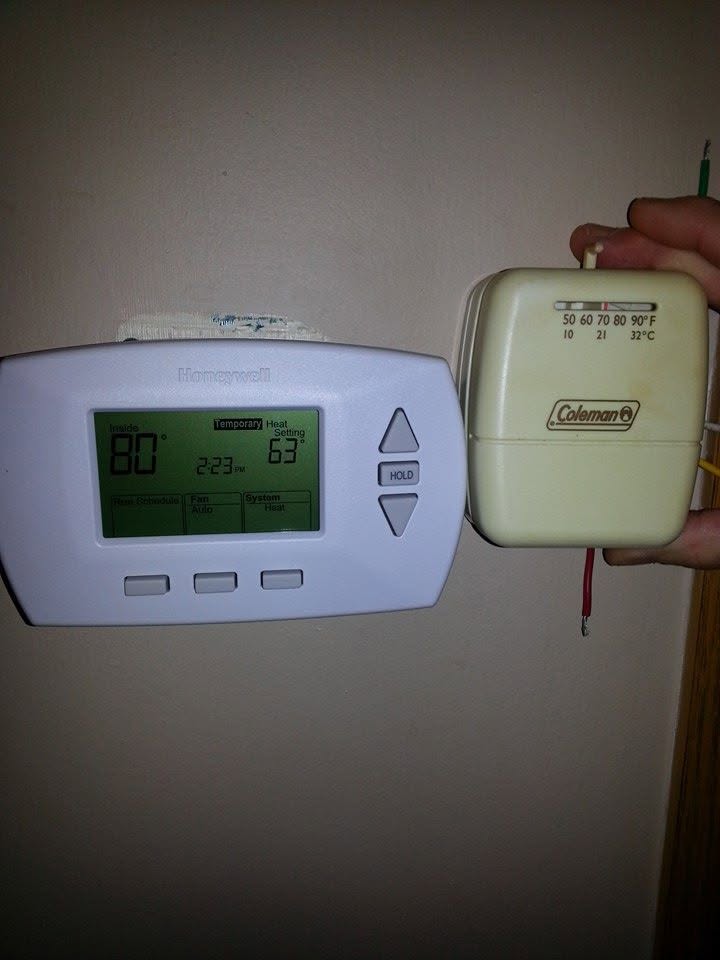
The result is probably the most telling pattern in this whole diagnosis: the thermostat behaves perfectly at rest and reboots the moment the equipment kicks on. Confirming that means opening both the thermostat and the air handler, which is part of our comprehensive repair and support service rather than something a homeowner should tackle alone.
Noticed your thermostat rebooting every time the furnace or AC kicks on? Give us a call at (951) 719-1175, and we’ll check the wiring before you spend money on a new thermostat.
Wiring Faults That Only Show Up During a Cycle
When batteries are fresh and the common wire’s landed properly, attention moves to the cable itself. Thermostat wire is low voltage and thin, and it takes damage pretty easily.
A staple driven too tight will do it, and so will a section rubbing against sheet metal at a duct penetration or a conductor nicked during an unrelated attic job. Each of those creates intermittent contact rather than a clean break.
The signature of that fault is erratic timing. Resets correlate with blower vibration, with a door closing hard nearby, or sometimes with nothing anyone can actually identify.
A break that is intermittent won’t show up on a continuity check while the system just sits idle, so the check has to happen under load. It’s a bit like troubleshooting a condenser cycling on and off for mechanical reasons, the fault only shows itself while everything’s actually running.
Watch for these before the visit:
- Whether resets line up with equipment startup or happen at random hours.
- Whether the clock returns to a default rather than just drifting.
- Whether a second thermostat in a zoned home shows the same behavior.
- Whether the breaker for the air handler has tripped recently.
- Whether anyone has been in the attic for insulation, roofing, or wiring work.
Those five answers can narrow a vague complaint down to a short list before a technician even opens anything up.
Answering them takes maybe ten minutes, tops, and it saves real diagnostic time on site. Bring the answers to the call, and the technician can start testing right away instead of interviewing you first.
When the Thermostat Is Not the Problem at All
Sometimes the thermostat is doing its job just fine, and the equipment is actually the problem. A furnace or air handler transformer failing under load drops control voltage the moment the system draws current, so the thermostat reboots because its supply genuinely disappeared.
Replacing the thermostat in that situation buys maybe a week of normal behavior before the same symptom comes right back. Losing a call mid-cycle like that can also be an early sign of furnace issues pointing to replacement further down the road.
Power quality can do the same thing from outside the house. Brief grid interruptions and surges will clear the memory of any thermostat without decent backup, which loops right back to the batteries again.
A thermostat fault can also surface downstream too, showing up as a system that starts and stops without ever settling, kind of like that condenser short cycling we mentioned earlier, just for electrical reasons instead of mechanical ones.
Get the Power Path Checked Rather Than the Thermostat Replaced
A repeated reset is worth chasing down properly, not just resetting again and moving on. The same interruption that clears a schedule is also cutting control power to the heating and cooling equipment itself.
Fixing the actual supply protects more than just the schedule. Swapping the thermostat without testing the supply usually just means paying twice for the same fault.
Our technicians serve Temecula, Murrieta, Menifee, Wildomar, and the wider Southern California region. We work across heating, cooling, ventilation, and heat pump equipment, not just one system at a time.
Book a diagnostic visit, and we’ll trace the power path from the transformer all the way to the terminal. Then we’ll tell you what actually needs replacing, if anything does at all.
Have questions about why your thermostat keeps resetting, or just want someone to take a look before you spend money on a new one? Contact us, and we’ll help you figure out what’s actually going on. You can also reach us at (951) 719-1175 or admin@reesemechanical.com. We’re open Monday through Friday, 7:00 am to 5:00 pm.
Related Topics: