
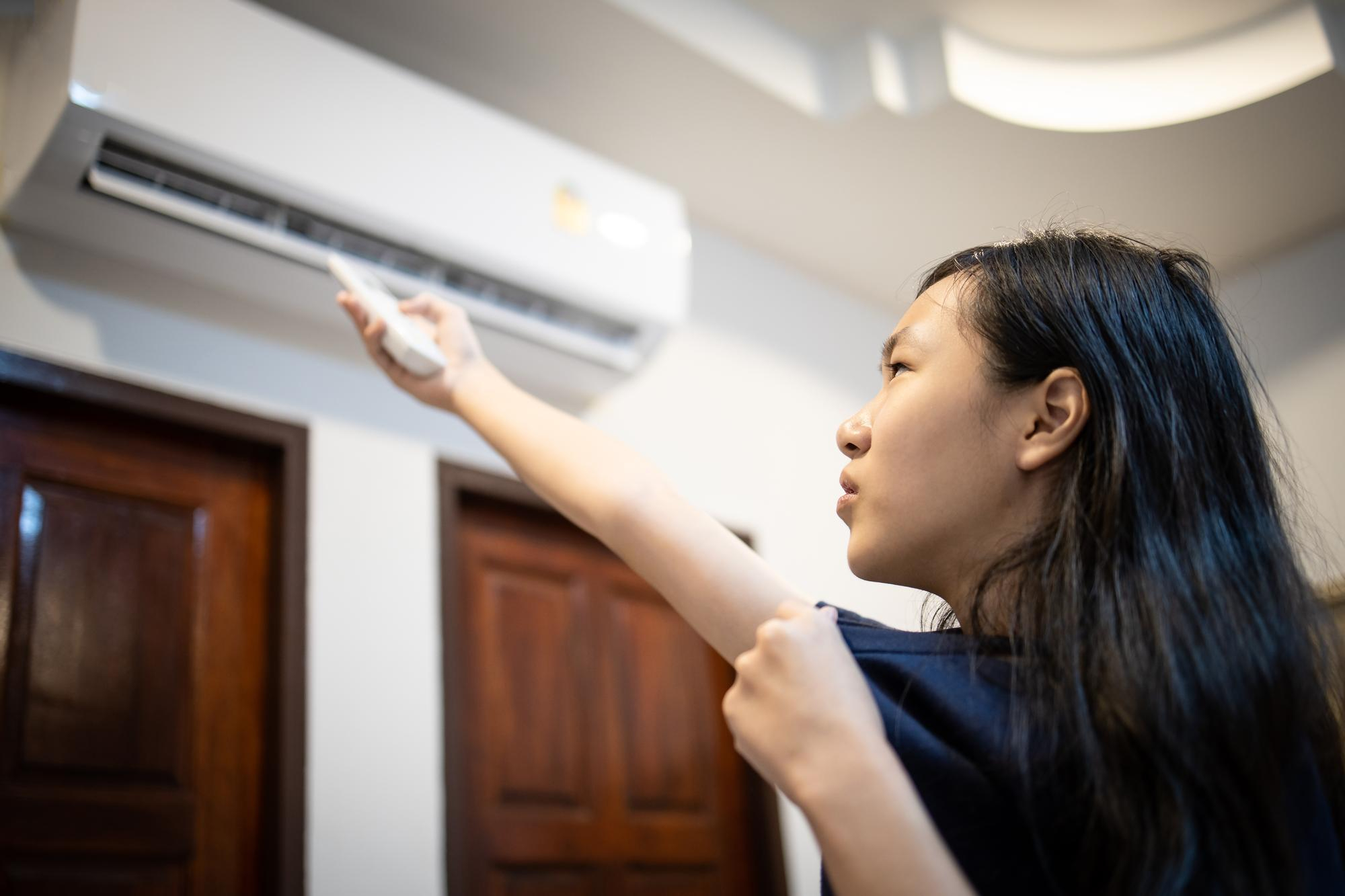
Warm air at the vents is a more specific complaint than a house that will not cool, and the difference is useful. Air arriving at normal volume tells you the blower works, the filter is passing air, and the ductwork is delivering.
The failure has to sit somewhere between the refrigerant circuit and the controls that drive it. Our technicians work across Murrieta and the surrounding cities through the hottest months, and anyone can arrange home AC repair when the supply air never turns cold.
What follows works outward from the cheapest explanations to the ones that force a larger decision.
Air Is Moving but It Is Not Cold: What That Rules Out
A system with strong airflow and no cooling has already eliminated a good portion of the usual suspects. A severely clogged filter or a frozen evaporator coil would both choke the volume reaching the vents, so weak airflow and warm airflow point in different directions from the outset.
That leaves three territories. The thermostat may not be asking for cooling in the way you assume. The outdoor unit may not be running, which means heat gets collected indoors and never released. Or the refrigerant circuit may have lost the capacity to move heat at all.
Walking outside and listening is the single most informative thing you can do, because a silent condenser while the indoor blower runs narrows the problem immediately.
Thermostat Settings That Produce Warm Air
Two settings produce warm air at the vents with no fault anywhere in the equipment. A thermostat left in heat mode will do exactly what it is told, and this catches people during the shoulder seasons when a cool morning prompts a change that nobody reverses. Checking the mode takes seconds and rules it out permanently.
The other is the fan setting. Left on rather than auto, the blower runs around the clock, including the long stretches between cooling cycles. During those gaps, it circulates room-temperature air, or warmer air if the ducts run through an attic, and the vents feel warm to the touch.

Switching the fan to auto means it only runs while cooling is actually happening. Dead batteries and lost schedules produce stranger versions of the same complaint, with the system cooling at hours you never asked for.
Outdoor Unit Faults Behind Warm Air
If the condenser is not running, or running without actually moving heat, warm air at the vents follows directly. This is where most genuine warm air calls end up once the thermostat has been ruled out. What you can see and hear from the yard narrows it considerably before a technician arrives.
| What you observe outside | Likely cause | Typical outcome |
| Condenser completely silent, indoor fan running | Tripped breaker on the outdoor circuit, or failed contactor | Repair, often straightforward |
| Fan spinning, no hum from the compressor | Failed run capacitor or compressor fault | Repair, cost depends which |
| Unit running but coil caked with dust and debris | Fouled condenser coil blocking heat release | Cleaning, then reassessment |
| Running constantly, cooling slightly, never satisfying | Low refrigerant charge or declining compressor | Leak search and a longer conversation |
| Short bursts of running, then shutdown | Overheating or a pressure switch tripping | Diagnosis before further operation |
Condenser coils in this region collect dust quickly, and a coil that cannot release heat leaves the refrigerant arriving back indoors still carrying it. That is worth knowing alongside how long condensers typically last, since a neglected coil shortens that figure considerably.
Vents blowing warm with the outdoor unit silent? We cover Murrieta, Temecula, Menifee and Wildomar, and reach into the Los Angeles, Orange County, San Diego and Riverside markets. Contact us to get a technician out.
Refrigerant Loss and What It Signals
Where thermostat and electrical causes have been ruled out, refrigerant becomes the likely answer. It carries implications worth knowing before anyone quotes a recharge, because the way this repair gets handled separates a lasting fix from a seasonal one.
- A low charge always means a leak. Refrigerant circulates in a sealed loop and is not consumed, so a system low on charge has lost it somewhere.
- Cooling fades rather than stops. Slow leaks show up as a system that worked acceptably last summer and struggles this one.
- Recharging without repair is temporary. The new charge escapes through the same path, usually within weeks or a season.
- Leak location decides the cost. A fitting or a service valve is a modest repair. A leaking evaporator coil or line set buried in a wall is a different conversation entirely.
- Older refrigerant types raise the stakes. Systems built for R22 face a refrigerant that is no longer produced, which makes any refrigerant-related repair expensive and harder to source.
- Running low damages the compressor. Refrigerant carries oil through the circuit, and a starved system runs hot and poorly lubricated.
A technician should be finding the leak, not just topping up the charge. Pressure readings alone do not locate it, which is why a proper visit includes inspecting the coil and line set for the oily residue that marks an escape point.
Warm Air From an Older System, Repair or Replace
At some point the question stops being what failed and becomes whether fixing it makes sense. A system past its mid-teens that has lost refrigerant through a corroded evaporator coil, or one facing a compressor replacement, sits right at that line. The repair is almost always possible. Whether it is worth doing depends on what else is likely to fail within a couple of seasons.
We give that assessment plainly before any work begins, weighing age, repair history, and the cost of the fix against what a current system would cost to run. Many of the indicators overlap with when condensers reach replacement point, and they rarely appear all at once.
A homeowner who knows a compressor is marginal can plan for it rather than making the decision during a heat wave with no cooling in the house.
If the vents have been blowing warm and you want a straight answer on what it will take, we can look at it. Our team covers heating, air conditioning, ventilation, and heat pump work across southwest Riverside County, and you will hear the repair or replace verdict before anything gets started.
Related Topics: