
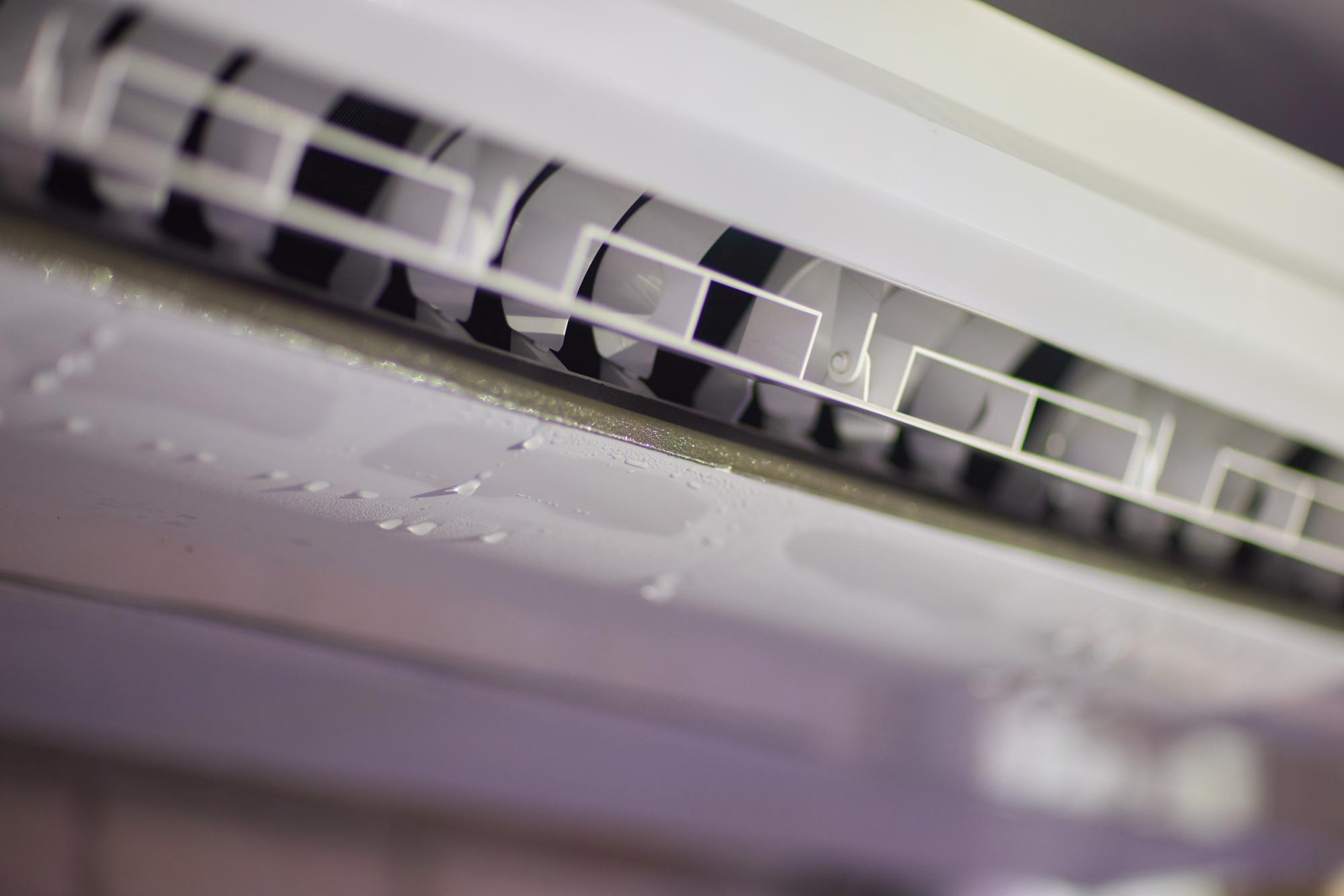
Water around an indoor air handler is alarming in a way that most cooling faults are not, because the damage spreads while you work out what caused it. Ceilings stain, closet floors swell, and the system often keeps running as though nothing is wrong.
We see these calls across Murrieta and the surrounding Riverside County cities all summer, and the cause is usually drainage rather than anything exotic inside the equipment. Our team handles residential and commercial AC repair for homes and businesses, and water calls follow a recognizable pattern.
The useful distinction is between water that is supposed to exist and water that has escaped its path. Knowing which one you are looking at narrows the problem down fast.
Where Water Inside an Air Conditioner Comes From
Every cooling system produces water as a byproduct. Warm indoor air passes across the cold evaporator coil, moisture in that air condenses on the coil surface, and the resulting water drips into a drain pan underneath. From the pan, it runs out through a condensate drain line, usually white PVC, and discharges outside or into a drain.
None of that is a malfunction. A system running hard on a hot afternoon produces a steady trickle for hours. The fault appears when that water cannot complete the trip. Block the line, crack the pan, or produce more than the drain was sized for, and it finds the nearest low point, usually a ceiling, a wall cavity, or the floor beside the air handler.
Common Reasons an AC Starts Leaking Water
A blocked condensate drain line accounts for the large majority of what we find. Dust, algae, and biological sludge build up inside the pipe over several seasons until water backs up into the pan and over the edge. Systems that run long hours in summer reach that point sooner.
Behind that sit a handful of others. A drain pan that has rusted through or cracked will leak even with a perfectly clear line. A drain line knocked loose during other work discharges straight into the cabinet.

A condensate pump, used where gravity drainage is not available, leaks once it fails or clogs. And a frozen evaporator coil produces far more water than the drainage system was built for, so when the ice melts, the pan overflows regardless of its condition.
Ice is worth singling out, because it is a symptom rather than a cause. Coils freeze when airflow is restricted, or the refrigerant charge is low, which are the same conditions behind condensers that short-cycle. Clearing the water without addressing the freeze means the leak returns within days.
Indoor Leaks Versus Outdoor Pooling: How to Tell
Not all water near an air conditioner points to a problem. Where it appears, and whether it shows up during operation or after shutdown, tells you a great deal before anyone opens a panel. The table below covers what we find most often on these calls and which situations warrant a technician rather than a towel.
| What you see | What it usually means | Who should handle it |
| Water pooling under the indoor air handler | Blocked drain line, cracked pan, or a coil that has frozen and thawed | Technician |
| Steady drip from the outdoor unit on a humid day | Normal condensate discharge from the drain line | No action needed |
| Water staining a ceiling below an attic unit | Overflowing pan, often with a failed secondary drain or float switch | Technician, promptly |
| Ice visible on the refrigerant lines or indoor coil | Airflow restriction or low refrigerant charge | Shut cooling off, then technician |
| Damp patch only after the system shuts off | Melting ice from a coil that froze during operation | Technician |
Attic installations deserve extra attention, since those are common in Southern California homes and a pan overflow there does its damage out of sight. Most are fitted with a secondary pan and a float switch designed to shut the system down before water reaches the ceiling. When a system stops cooling and water is present, that switch has often done exactly its job.
Water showing up where it should not be? We service Murrieta, Temecula, Menifee and Wildomar, and work across the Los Angeles, Orange County, San Diego and Riverside markets. Get in touch to book a technician.
What to Do Before a Technician Arrives
A few steps limit the damage while you wait, and one or two of them resolve the simplest version of the problem outright. None of these require opening equipment or touching anything electrical.
- Switch the cooling off at the thermostat. Leave the fan on auto. Continued operation keeps producing water and keeps a frozen coil frozen.
- Soak up standing water and protect what is below. Towels under an attic unit buy time against a ceiling stain.
- Check the air filter. A loaded filter is behind a large share of frozen coils, and replacing it removes the cause before the next cycle.
- Look for the drain line outside. If the system has been running and nothing is discharging, the line is likely blocked.
- Let any ice melt completely. A coil buried in ice cannot be diagnosed, and running the blower with cooling off speeds the thaw.
Avoid pouring chemicals down the drain line hoping to clear it. Bleach damages pans and fittings over time, and a line blocked solid will not clear that way.
How We Handle Drainage and Leak Repairs
Our technicians trace the water to its origin before replacing anything. That means checking the pan for corrosion, clearing and flushing the condensate line properly rather than poking at the opening, testing the float switch, and inspecting the coil for ice or fouling.
When a coil has been freezing, we check airflow and refrigerant charge in the same visit, because clearing the drain alone leaves the actual fault in place.
Drainage problems are often the visible end of maintenance that has slipped, which is why the warning signs of overdue maintenance are worth reading if water has appeared more than once. Where a repair stops making sense against the age of the system, we say so before any work starts.
If water has appeared around your system, have the cause found before the next hot stretch. We handle heating, air conditioning, ventilation, and heat pump work across southwest Riverside County and the wider Southern California region, so one visit covers the whole system rather than the drain alone.
Related Topics: