
Finding ice on a machine whose entire purpose is cooling feels contradictory, and most homeowners assume it means the system is working too hard. The opposite is closer to the truth.
A frozen coil is a system that has lost the ability to absorb heat properly, and every hour it keeps running makes the underlying fault worse. Our technicians see it across Murrieta and the surrounding cities from late spring onward, and anyone can book air conditioner repair with our team once ice turns up.
Freezing traces back to one of two conditions almost every time. Either not enough warm air is reaching the coil, or there is not enough refrigerant in the circuit. Telling those apart is what decides whether this is a filter you replace yourself or a leak that needs finding.
Why Ice Forms on a System Built to Cool
The evaporator coil inside the air handler runs cold by design, typically sitting in the low forties when everything is working. Warm indoor air passes across it continuously, and that constant flow of heat is what keeps the coil above freezing while it does its job.
Remove the heat load and the physics change. If airflow drops, or if refrigerant pressure in the coil falls, the surface temperature keeps sinking past freezing. Moisture condensing on the coil then turns to frost rather than draining away.
Frost reduces airflow further, which drops the temperature further, which builds more frost. The cycle accelerates on its own, and a coil that showed light frost in the morning can be encased in solid ice by evening.
Airflow Problems Behind a Frozen Coil
Restricted airflow is the more common of the two causes and usually the cheaper one. A clogged air filter leads the list by a wide margin, particularly in homes with pets or during stretches when dust is heavy.
Closed or blocked supply vents reduce the volume moving through the system, and a surprising number of calls trace back to furniture pushed against a return grille.
Beyond the parts a homeowner can reach, a dirty evaporator coil insulates itself against the air passing over it, producing the same result as a blocked filter. Collapsed or disconnected ductwork in an attic cuts delivery dramatically.
A blower motor losing speed moves less air every season until the margin disappears. These share root causes with short cycling and what causes it, which is why a system that freezes often behaved oddly for weeks beforehand.
Refrigerant Problems Behind a Frozen Coil
The other half of the diagnosis sits in the refrigerant circuit. When the charge drops below where it should be, pressure inside the evaporator coil falls, and lower pressure means a lower boiling temperature for the refrigerant. The coil then runs colder than designed even with perfect airflow.
Refrigerant does not get consumed. A sealed system holds its charge indefinitely, so a low charge means a leak somewhere in the coil, the line set, or a fitting.
This matters for what comes next, because adding refrigerant without locating the leak restores cooling for a few weeks and then leaves you back where you started, minus the cost of the refrigerant. A failing metering device or a stuck expansion valve produces similar symptoms and needs the same kind of instrumented diagnosis.
Seeing ice on your system? We cover Murrieta, Temecula, Menifee, and Wildomar, and work across the Los Angeles, Orange County, San Diego, and Riverside markets. Reach out, and we will get a technician scheduled.
Steps to Take the Moment You See Ice
Acting quickly limits the damage, and a couple of these resolve the simplest version of the problem outright. The order matters more than people expect, because thawing a coil the wrong way causes its own repairs.
- Turn cooling off at the thermostat, and leave the fan set to auto. Running the blower without cooling pushes room-temperature air across the coil and thaws it far faster than switching everything off.
- Give it time. A heavily iced coil can take several hours to clear. Rushing it with heat or a scraper damages the fins and risks puncturing a refrigerant line.
- Put towels down. All that ice becomes water, and the drain pan may not handle the volume at once.
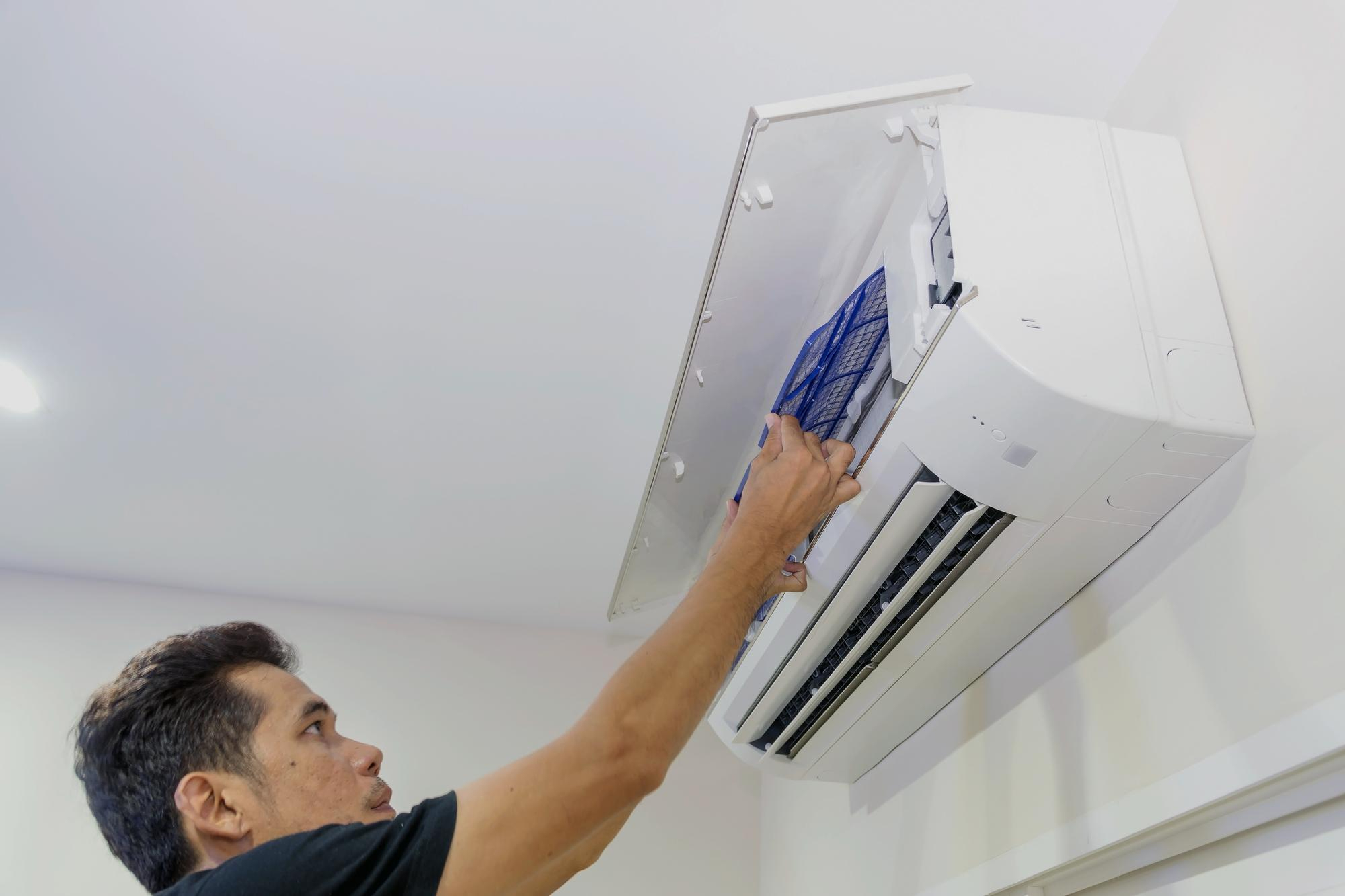
- Replace the air filter. If it is grey and loaded, you may have found the cause.
- Open every supply vent and clear the return. Restricting airflow to unused rooms works against the system rather than saving energy.
- Note how long it took to freeze. A system that ices within an hour of restarting points to refrigerant rather than airflow, which is useful information for the technician.
Resist restarting cooling before the coil has fully thawed. Running a compressor against a blocked coil risks liquid refrigerant returning to it, and that failure costs considerably more than the one that caused the ice.
When Freezing Points to Something Larger
A single freeze after a neglected filter change is a maintenance lapse. Repeated freezing is a system telling you something structural has shifted. Coils that ice up every season usually have a slow leak that has never been found, ductwork that was marginal from installation, or a blower that no longer moves what it was rated to move.
Our technicians diagnose the cause rather than clearing the ice and leaving. That means measuring airflow, reading operating pressures, inspecting the coil and line set for oil residue where refrigerant escapes, and checking the blower under load.
When the pattern matches the seven signs a system needs maintenance, we say so. If repeated freezing has already damaged the compressor, we tell you whether repair or replacement is the better use of the money before any work begins.
If your system has frozen more than once this season, get the cause identified rather than the ice removed. We handle heating, air conditioning, ventilation, and heat pump work across southwest Riverside County, so the airflow, refrigerant, and duct side all get checked in the same visit.
Related Topics: