A yellow or flickering burner flame, soot around the cabinet, repeated repairs across two winters, and an age past 15 years, those are the four things that move a furnace from repair to replacement.
Any one of them is worth a look on its own. Put them together, though, and the question pretty much answers itself. Pull the service panel next time the furnace fires and check the color of that burner flame, it tells you more in five seconds than a week of guessing would.
We work across Riverside County as a licensed HVAC service handling heating, air conditioning, ventilation, and heat pump equipment, and there’s over two decades of field experience behind the crew doing it.
Our technicians look at what is actually installed and tell you honestly whether it’s worth restoring before any work starts. No guessing games, just a straight read on the equipment in front of them.
The Age Bracket Where Replacement Enters the Conversation
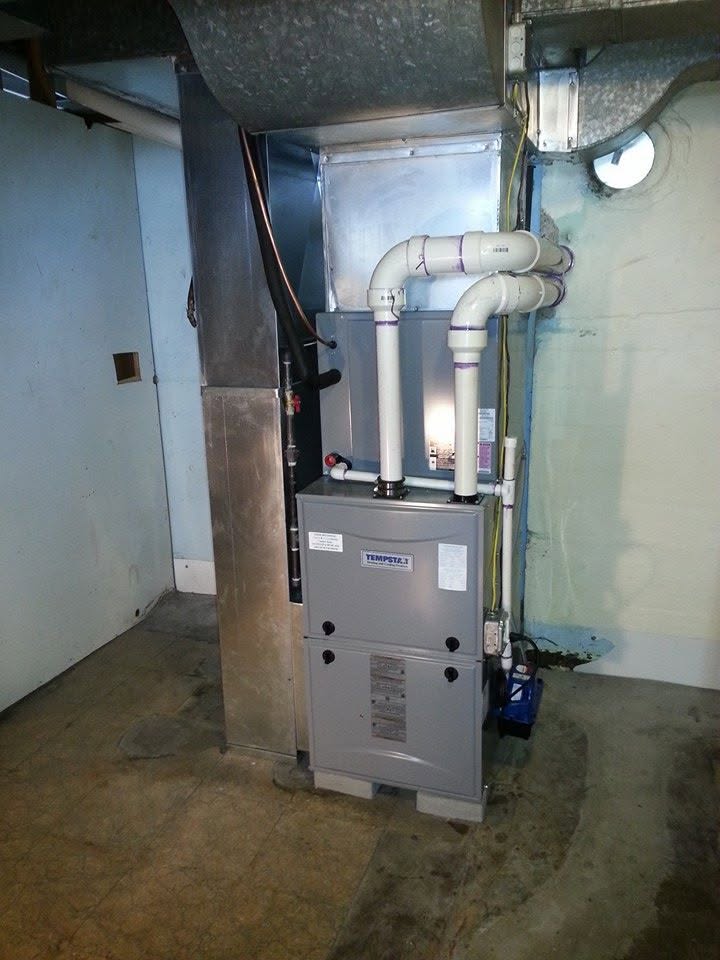
Gas furnaces are generally built for 15 to 20 years of service, and that’s a pretty wide window honestly.
Winchester sits in that same inland pocket of southwest Riverside County, where heating seasons run short and mild, so local units tend to drift toward the upper end of that range instead of the lower. Fewer operating hours mean slower wear on the heat exchanger and burner assembly, which is a nice break for homeowners here.
That longevity comes with a catch, though, because a furnace quietly running through eighteen mild winters has still gone through thousands of heating cycles. Each cycle expands and contracts the metal of the heat exchanger just a little more, and that fatigue builds up whether the system worked hard or not.
It’s part of why staying on top of heating service matters even when nothing seems wrong, you know, even when everything feels fine. Once a unit passes fifteen, an annual inspection becomes the baseline, not something optional.
The same age logic applies to how long an AC condenser typically lasts on the cooling side, so it’s worth keeping both in mind. If your furnace is creeping past that fifteen-year mark, it might be a good time to have someone take a real look at it instead of just hoping for the best.
That’s where our services come in, we’ll walk you through exactly where your system stands and what makes sense next.
Burner Flame and Soot: The Signs That Change Everything
A healthy gas burner flame burns steady and blue, plain and simple. Yellow, orange, or a flame that lifts and dances around means incomplete combustion, which usually just means the air-to-fuel ratio has shifted.
Dirty burners and incorrect gas pressure both cause this, and both are easy enough to fix. A cracked heat exchanger can cause the same thing too, though, and that’s a whole different situation.
Soot around the burner compartment, or black residue near the supply registers, points the same direction. Neither one confirms a cracked heat exchanger on its own, and honestly, no homeowner should try to diagnose that visually. What they do confirm is a furnace that isn’t burning clean.
Around a carbon monoxide-producing appliance, that calls for a technician with real combustion analysis equipment, not a guess. If a carbon monoxide alarm sounds, get everyone outside right away and call the gas utility. Better safe than sorry on that one.
Repeat Repairs and the Pattern Behind Them
One failure in a season? That’s just a repair. A furnace that needs an ignitor at year ten is a healthy system with one worn part, and swapping it out is the right move.
The pattern that actually matters looks different, though, more like three or four separate faults spread across two heating seasons, each one landing in a different part of the system.
That pattern usually just means the components are aging at the same rate, since they all went in on the same day. Fixing whatever failed this time does nothing for the other parts sitting a few months behind it. Here’s what to watch for together:
- Repairs in consecutive winters on different components rather than the same one recurring.
- A furnace that will not hold a schedule, which can trace to control power rather than the furnace.
- Uneven heat between rooms that was not there two years ago.
- Startup noises that are new, including banging, screeching, or a delayed ignition thump.
- Gas bills rising with no change in thermostat habits or household routine.
Three of those showing up on a unit past fifteen years is where we lay out both paths honestly, repair and replace. Quoting just the next repair in isolation wouldn’t give you the real picture anyway.
A furnace showing three of those signs is worth getting assessed before the season starts. Ask for combustion readings and the actual unit age, not just a quote for whatever part failed.
Noticing repairs piling up each winter, or a furnace that just doesn’t seem to keep up anymore? Give us a call at (951) 719-1175, and we’ll take a look before the next cold snap makes the decision for you.
Heating That Costs More and Delivers Less
Efficiency loss in a furnace happens so gradually that most households just adjust without really noticing. The heat still shows up, it just takes longer, so the system ends up running for more minutes to hit the same temperature.
The real comparison is a January bill against that same month three or four winters back, not month to month, since those comparisons get drowned out by weather swings anyway.
Uneven heating belongs in the same conversation, though it doesn’t always point to the furnace itself. Restricted ductwork, a failing blower motor, or just a dirty filter can all leave rooms stuck cold.
All three are fixable without ever touching the furnace, so a technician should rule those out first before replacement even comes up. A faulty thermostat causes the exact same complaint too, which is part of why one that keeps losing its programming gets checked early.
What We Check Before Recommending a Replacement
Our process starts with the data plate and the combustion readings, not with whatever symptom the homeowner described over the phone. Age, model, measured flame characteristics, and a physical inspection tell us what we’re actually working with.
Airflow gets checked at the same visit too, since a starved return causes overheating that damages the exchanger, and it’ll do the same thing to a brand new furnace just as easily.
From there, the recommendation follows the condition, not the calendar. A confirmed cracked heat exchanger means the unit gets shut down right then, no matter the age. Past fifteen years, that almost always means replacement rather than swapping the exchanger.
A clean combustion reading on an older furnace with just one failed part means we fix that part, plain and simple, then tell you honestly to start planning for replacement within a few seasons. Heating is just one piece of what we handle, and we read the whole system rather than the furnace alone.
Have the Furnace Looked At Before the Season Turns
Winchester winters are mild enough that a marginal furnace can limp through several of them without much fuss. Nobody really notices what’s happening inside the cabinet until it fails on you.
That’s kind of the whole argument for scheduling an inspection instead of waiting for a service call afterward. One visit with the right combustion equipment tells you whether you’ve got a worn part, a safety problem, or a unit that’s near the end.
Our team works across Riverside County and the wider Southern California region, covering heating, cooling, ventilation, and heat pump equipment all under one contractor. Ask for a heating assessment before the weather turns on you. You’ll get the age, the readings, and a straight recommendation, not just a quote for whatever happened to fail last.
Have questions about a furnace that’s on the edge, or just want a second opinion before winter hits? Contact us, and we’ll help you figure out whether it’s time to repair or replace. You can also reach us at (951) 719-1175 or admin@reesemechanical.com. We’re open Monday through Friday, 7:00 am to 5:00 pm.
Related Topics: